
How to Style a Coffee Table for Real Life (That Still Looks Beautiful)
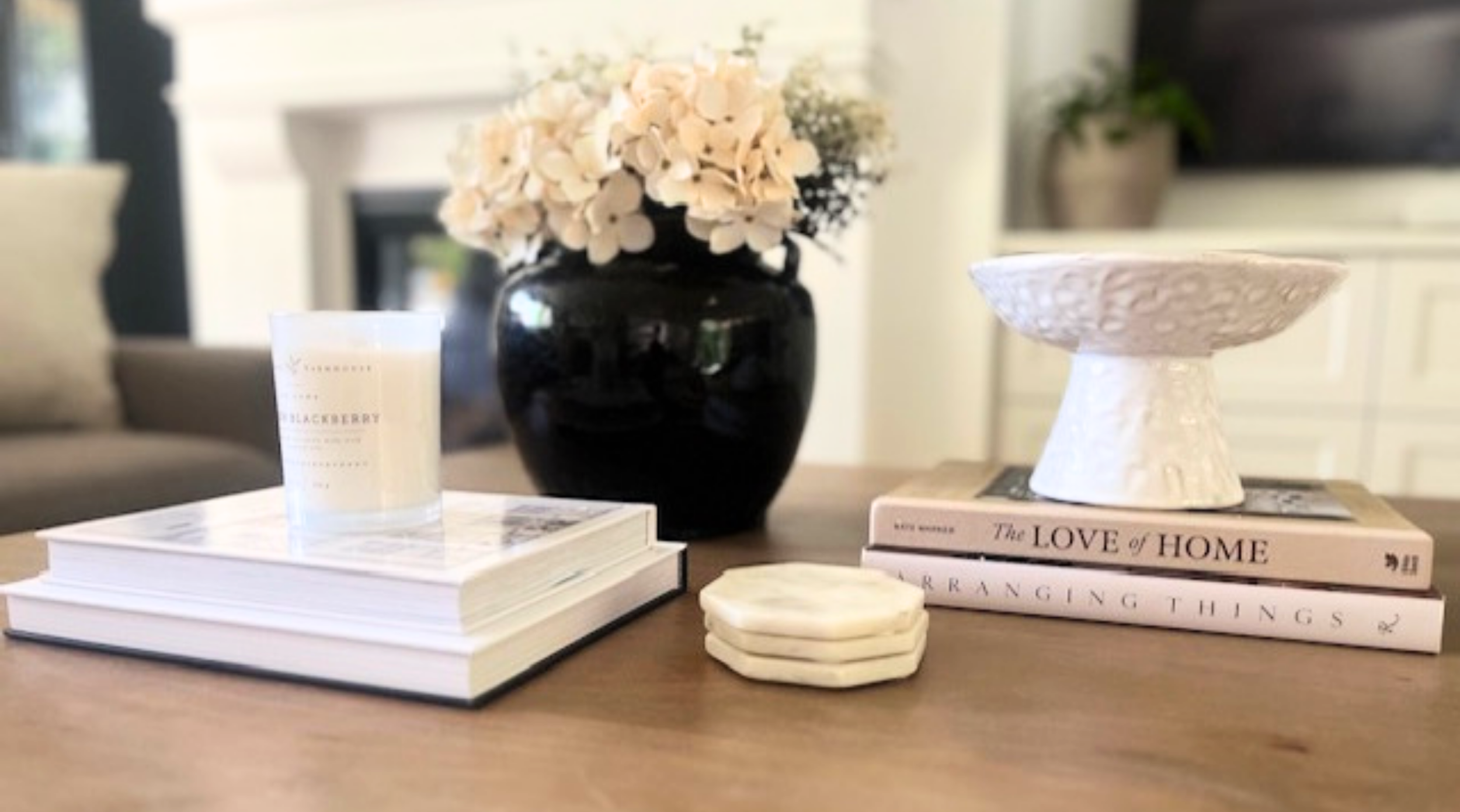
Why it Works
The trick is balance. Variation in height, texture, and shape creates interest without clutter. Books anchor the styling, florals soften the space, and the neutral palette keeps everything cohesive. Leaving breathing room is what makes it feel calm — and usable.
I love a beautifully styled coffee table. The stacked books. A sculptural object. Fresh flowers. The kind of coffee table that somehow makes an entire room feel layered, calm and finished.
So naturally, I styled ours. And honestly? It looked great — until I realized my family kept shifting things around. Not because the coffee table was styled, but because I had styled all of it. Every inch felt spoken for. The decorative pieces got moved to make room. Books shifted. Objects migrated. And my carefully chosen vintage vase — the one I apparently thought deserved museum-level protection — somehow kept ending up on the floor beside the couch as casually as if it were a rogue LEGO.
Eventually, I realized the problem wasn’t styling the coffee table. It was forgetting to leave room for real life. At first, this drove me slightly insane. But eventually I had to admit something: they weren’t wrong. This isn’t our formal living room. It’s our family room. It’s where we gather, watch movies, sit with coffee and generally live our lives. Which meant I had to admit something else: however beautiful a coffee table looks, it still has to work for the people actually using it. That’s because the best rooms don’t just look beautiful. They work for real life.
The Secret to a Coffee Table That Feels Styled (But Still Functional)
With almost everything in design, the trick is balance.
Variation in height.
Texture.
Shape.
Colour.
And maybe most importantly: restraint.
A coffee table looks best when there’s enough happening to feel layered and intentional — but not so much happening that it starts feeling cluttered or impractical. Especially in a family room. A perfectly styled coffee table isn’t about filling every inch. It’s about creating enough interest to make a room feel finished, while still leaving room for life to happen. Over time, I’ve realized the goal isn’t perfection. It’s creating a coffee table that feels calm, collected and beautiful — while still looking like someone actually lives here.
Here’s what I’ve learned.
Rule #1: Leave Space on Purpose
My biggest styling mistake? Trying to fill the entire table. A coffee table often looks more elevated when it has breathing room. Empty space isn’t unfinished — it’s intentional. In fact, I think leaving space is what makes a coffee table feel calmer and more functional. At least in our house, space is our friend. I used to think every corner needed something. Now I intentionally leave open areas because the table still needs to do its job. And ironically? The styling looks better because of it.
Rule #2: Create Variation in Height, Texture and Shape
This is one of those quiet design principles that instantly makes a room feel more finished. If everything is the same height, colour, or material, things can start to feel flat. Instead, think about contrast.
Something soft beside something structured.
Something textured beside something smooth.
Something round beside something linear.
In a neutral room especially, texture matters just as much as colour.
I tend to gravitate toward a mix of:
ceramics
wood
linen textures
glass
woven elements
books
natural greenery or florals
That layered mix is what gives a coffee table personality without making it feel busy.
For me, styling is always part personality and part function: a candle I love; books that actually mean something; a sculptural piece that adds shape; a vessel with flowers or branches. The trick is keeping the colour palette aligned with the room so everything feels cohesive rather than random.
Rule #3: Anchor Things Together
Random objects scattered across a coffee table can start to feel messy quickly. Grouping pieces together instantly makes styling feel more intentional. Books and trays are especially helpful here. Think of them as anchors. A stack of books can ground a candle or decorative object. A tray can corral smaller pieces so they feel purposeful instead of floating around awkwardly. I also find a coffee table tends to feel more balanced with a few grouped “moments” rather than lots of little objects spread everywhere. Not overly styled. Just intentional.
Finally, if your family actually uses the coffee table, grouped pieces are easier to shift when someone suddenly decides game night is happening.
Rule #4: Keep Scale in Mind
Height matters — but scale matters even more.
A coffee table should feel layered without becoming visually heavy. I’ve found lower-profile arrangements tend to work better in a family room because they still feel styled without competing with the room or interrupting how it functions.
Think:
stacked books
candles
bowls or trays
sculptural objects
lower florals or greenery
Beautiful styling shouldn’t get in the way of how you actually use the space. The goal is for the room to feel finished — not untouchable.
Rule #5: Let Personality and Function Share the Space
Coffee table styling should feel personal — not showroom perfect. Part personality and part function. For us, that means balancing beautiful objects with things we genuinely use.
Maybe that looks like:
books you actually flip through
coasters that get used daily
a candle you love
a meaningful object from travel
a bowl that secretly holds remotes
Your coffee table doesn’t need to look like it belongs in a magazine. It should feel like it belongs in your home. Just a slightly more pulled-together version of it.
My Simple Coffee Table Formula
If you’re staring at a blank coffee table wondering where to start, here’s an easy framework:
Something grounding - A stack of books or a tray to anchor the arrangement.
Something organic - flowers, branches, greenery, or a natural material to soften the space.
Something sculptural or personal - an object that adds shape, personality, or meaning.
Something functional -coasters, a candle, remotes in a bowl — things that actually get used.
Then stop. You don’t need to fill every corner. Leave space. The empty areas are often what make a coffee table feel calm, elevated and easy to live with.
Style for the Life You’re Actually Living
I still style our coffee table. I still want our family room to feel calm, layered and finished. But now I style it differently. Not for perfection. Not for a photo. But for us. For coffee in the mornings. For conversations. For movie nights. For the reality of a family room that actually gets lived in. Because the best rooms aren’t the ones nobody touches. They’re the ones people want to gather in.